


Modern vehicles are increasingly defined by how drivers interact with technology inside the cabin. For BMW, the digital cockpit is not simply a place to display navigation or media information. It functions as a central interface that connects vehicle systems, driver information, and connected services into one integrated environment.
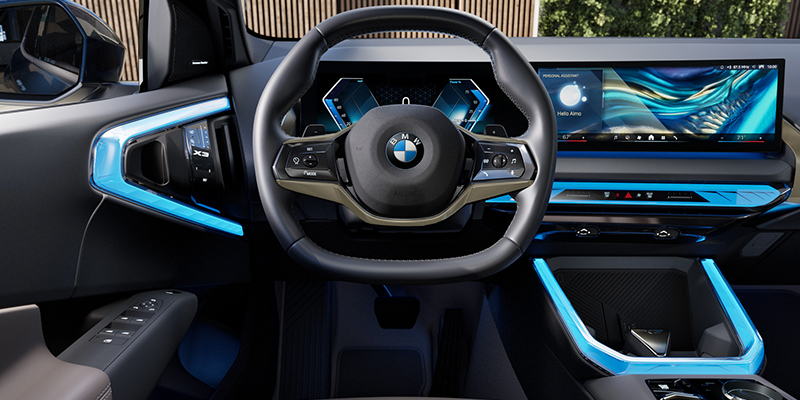
Shoppers researching BMW vehicles often notice the BMW Curved Display, a distinctive panoramic screen that stretches across the dashboard. While the visual design stands out immediately, the real purpose of the system is to organize critical driving information in a way that keeps drivers informed while maintaining focus on the road. Understanding how the BMW digital cockpit works helps explain why it has become a defining feature across the BMW lineup.
How the BMW Curved Display Organizes Driver Information
Many shoppers ask what the BMW Curved Display actually does beyond replacing traditional gauges. The BMW Curved Display is a panoramic digital interface that combines the instrument cluster and infotainment screen into a single driver oriented display system.
In BMW vehicles equipped with this technology, the display is divided into two functional areas. The portion directly in front of the driver acts as the digital instrument cluster, while the center portion serves as the primary infotainment and control interface.
This layout allows drivers to access several types of information simultaneously:
Read the rest of this entry »BMW has built its reputation around a concept often described as driving dynamics. While many manufacturers focus primarily on comfort or raw power, BMW engineers its vehicles so that every system working beneath the body contributes to a balanced, predictable driving experience.
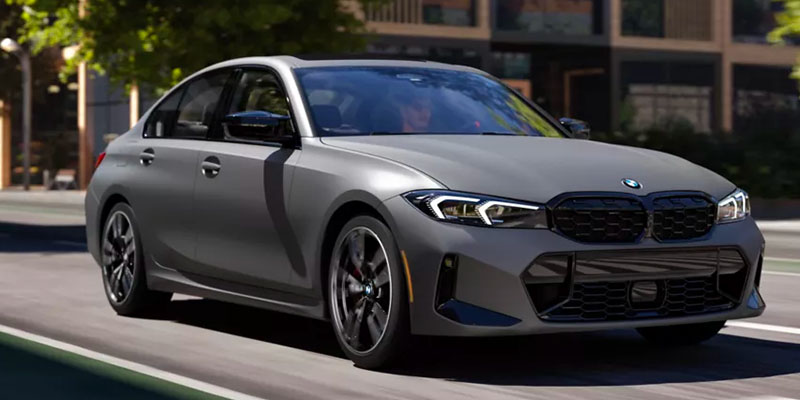
For shoppers researching the 2026 BMW 3 Series, one phrase appears repeatedly in reviews and buyer discussions: chassis balance. Understanding what that term actually means helps explain why BMW sedans continue to be compared against competitors when it comes to steering feel, cornering stability, and overall driver engagement.
What Chassis Balance Means in a Performance Sedan
Chassis balance refers to the way multiple mechanical systems work together to keep a vehicle stable and responsive while driving. Rather than relying on one component, balance is created by coordinating several elements of the vehicle’s design.
In a BMW sport sedan like the 2026 BMW 3 Series, chassis balance comes from the interaction of:
Read the rest of this entry »Driver assistance technology has evolved quickly in recent years, and one feature that many drivers now expect in a new vehicle is adaptive cruise control. Traditional cruise control has existed for decades, helping drivers maintain a steady speed on long highway drives. Adaptive cruise control builds on that idea by allowing the vehicle to automatically adjust speed based on surrounding traffic.

Instead of simply holding a constant speed, adaptive cruise control monitors the road ahead and responds to changing traffic conditions. The system can slow the vehicle when traffic slows and accelerate again when the lane clears. This helps reduce driver fatigue during highway travel and adds an additional layer of safety by maintaining a consistent following distance.
Understanding how adaptive cruise control works helps drivers see why this technology has become a core part of modern vehicle design.
How Traditional Cruise Control Works
Traditional cruise control focuses on one task: maintaining a set speed. When a driver activates cruise control and selects a speed, the vehicle’s engine control system automatically manages throttle input to keep the vehicle traveling at that speed.
This works well when traffic conditions remain consistent. However, it has a major limitation in real world driving situations.
Read the rest of this entry »Leasing is one of the most common ways drivers experience a new BMW. Many shoppers researching BMW lease options want to understand how the process works, why lease payments vary between vehicles, and what happens when the lease term ends. Unlike traditional financing, leasing focuses on paying for the vehicle’s expected depreciation during the time you drive it rather than the full purchase price of the vehicle.

For drivers exploring the 2026 BMW lineup, leasing allows access to BMW engineering, technology, and performance while maintaining flexibility when the lease term is complete. Understanding how BMW lease structures work helps shoppers evaluate monthly costs, mileage allowances, and long term ownership options before deciding whether leasing aligns with their driving habits.
How BMW Leasing Works
Many drivers researching BMW lease payments ask how leasing actually determines the monthly cost of driving the vehicle. Leasing is a financing structure that allows drivers to pay for the portion of the vehicle’s value that is used during the lease term rather than purchasing the entire vehicle.
A typical BMW lease is structured around several key components that influence the monthly payment:
Read the rest of this entry »BMW interior design is driven by function before appearance. Every surface, control, and material choice is engineered to support driving confidence, comfort, and long term usability rather than visual impact alone. For shoppers evaluating BMW interiors, especially in larger SUVs and three row configurations, understanding the intent behind the design explains why BMW cabins feel different over time, not just at first glance.

Interior craft at BMW is an extension of vehicle engineering. The cabin is treated as a working environment where ergonomics, durability, and driver awareness matter as much as aesthetics.
The Driver Focused Design Philosophy
BMW interiors are built around a driver centered cockpit layout. This philosophy prioritizes control access, sightlines, and feedback rather than symmetrical design for its own sake.
Key principles include:
- Controls angled toward the driver for reduced reach
- Clear separation between driving functions and comfort settings
- Instrument placement that minimizes eye movement
- Logical grouping of frequently used controls
This layout reduces cognitive load while driving, especially at speed or in complex traffic environments.
Read the rest of this entry »BMW digital systems are engineered to support driving rather than compete with it. Connected Services and interior technology are designed around the driver’s environment, integrating navigation, vehicle data, and convenience features in a way that feels intentional instead of overwhelming. For shoppers evaluating modern BMW interiors, understanding how these systems work in daily use is more important than knowing feature names.
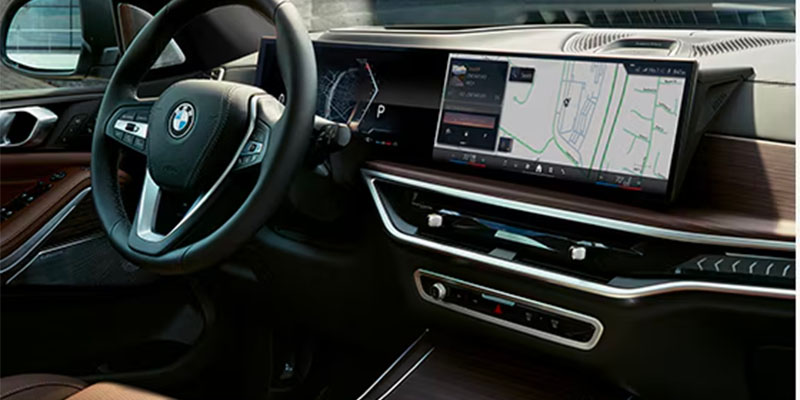
BMW approaches in vehicle technology as an extension of vehicle engineering. Software is expected to behave predictably, stay relevant over time, and remain secondary to the driving task.
What BMW Connected Services Actually Include
BMW Connected Services function as a centralized digital layer that links the vehicle, the driver, and supporting infrastructure. These services are not a single feature but a collection of systems working together.
Core capabilities include:
- Remote vehicle access for locking, unlocking, and status checks
- Vehicle location and security monitoring
- Maintenance alerts and service information
- Weather, traffic, and infrastructure data integration
- Digital key functionality on compatible devices
These services are designed to reduce friction during ownership rather than add interaction steps.
Read the rest of this entry »BMW’s approach to electrification is not built around replacing traditional driving with software driven behavior. It is engineered to expand how power is delivered while preserving the mechanical balance and responsiveness that define the brand. For shoppers evaluating 2026 BMW models, especially sedans and performance oriented platforms, understanding how BMW plug in hybrid systems actually function in daily use is essential to making a confident decision.
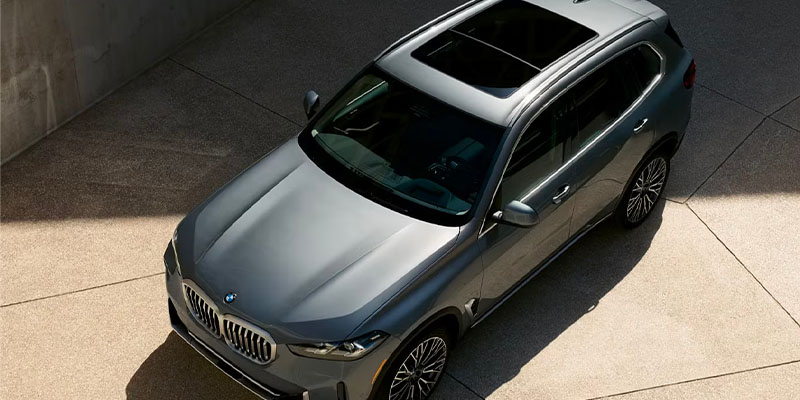
Electrification within BMW is modular by design. Gasoline engines, plug in hybrid systems, and fully electric drivetrains coexist on shared platforms, allowing each system to serve a specific driving purpose rather than forcing a single solution across all models.
BMW’s Electrification Strategy Explained
BMW does not treat electrification as a one size solution. Instead, the brand integrates electric components where they improve efficiency and response without undermining vehicle dynamics.
Key principles behind BMW electrification include:
- Retaining mechanical drivetrains where they deliver consistency and range
- Using electric motors to enhance torque delivery and efficiency
- Allowing drivers to benefit from electrification without lifestyle disruption
- Preserving weight balance and steering feedback
This strategy allows plug in hybrid models to operate seamlessly alongside traditional sedans rather than feeling like transitional products.
Read the rest of this entry »Leasing only works when the contract structure aligns with how a vehicle is actually used. For Orange Park shoppers comparing the BMW X5 and BMW 5 Series, the decision is not simply SUV versus sedan. It is about how each platform behaves under a lease when depreciation, mileage exposure, wear patterns, and daily driving habits are taken into account.
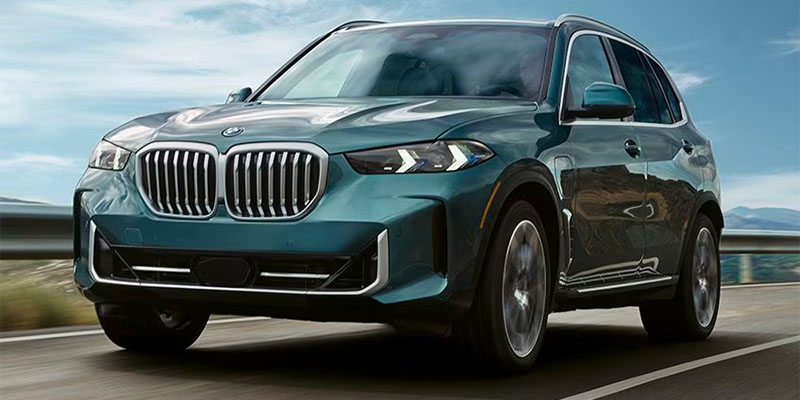
Both models lease well for different reasons. Understanding those reasons helps shoppers avoid common lease frustrations that usually surface at the end of the term rather than at signing.
How BMW Leasing Works at a Structural Level
BMW leases are closed end agreements. The vehicle’s future value is established up front and becomes a core factor in the monthly payment. Three variables dominate lease behavior.
- Residual value
This is the projected value of the vehicle at lease end. Higher residuals generally support lower payments but also increase sensitivity to mileage and condition. - Mileage allowance
Common allowances include 10,000, 12,000, and 15,000 miles per year, with the option to pre purchase additional miles. - Lease term
Most BMW leases are structured at 36 months, balancing warranty coverage and predictable depreciation.
The mistake many shoppers make is assuming these variables behave the same across all BMW models. Vehicle category plays a significant role.
Read the rest of this entry »Driving in Florida presents a unique combination of challenges that place increased importance on vehicle safety and intelligent driver support. Sudden rainstorms, heavy traffic, glare from low sun angles, and long highway stretches require systems that respond smoothly rather than aggressively. BMW safety and driver-assistance technologies are engineered to support the driver in these conditions by integrating sensors, braking systems, and chassis control rather than relying on isolated features.
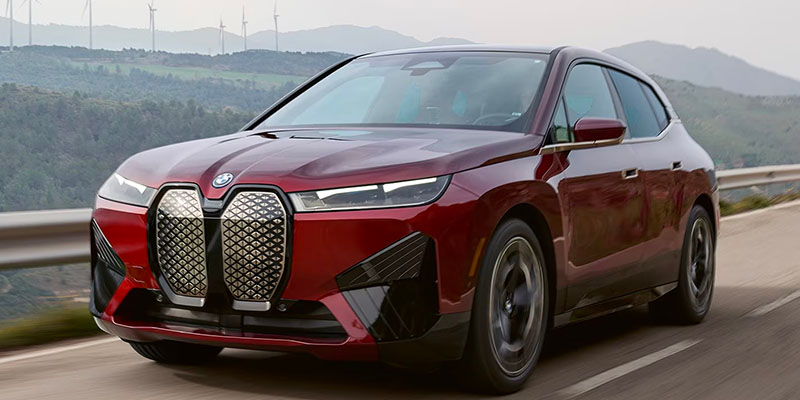
For Orange Park, Jacksonville drivers, understanding how these systems work in real-world Florida conditions helps set accurate expectations and improves daily confidence behind the wheel.
Active and Passive Safety Foundations
BMW safety begins with a layered approach that combines passive structural protection with active driver-assistance technologies.
Passive safety elements include:
- High-strength body structures designed to manage crash energy
- Strategically placed crumple zones
- Advanced airbag systems
- Reinforced passenger compartments
These systems operate continuously and form the foundation that allows active technologies to function effectively.
Read the rest of this entry »BMW has long defined its vehicles around a specific goal: preserving a clear, confident connection between driver and road. For Orange Park, Jacksonville drivers, that driving feel is not created by a single feature or mode. It is the result of layered engineering decisions that start at the chassis and extend all the way into the cabin. Suspension geometry, weight distribution, steering calibration, and digital cockpit design all work together to deliver control without isolation and comfort without detachment.

Understanding how BMW approaches this balance explains why its vehicles feel distinct even as technology becomes more prominent.
Chassis Balance as the Foundation of Driving Feel
Driving feel begins with how a vehicle carries and manages its mass. BMW engineers aim for balanced weight distribution across the chassis to support predictable handling behavior.
Key chassis priorities include:
- Near even front to rear weight distribution where platform design allows
- Rigid body structures that resist flex under load
- Strategic use of lightweight materials to reduce unnecessary mass
- Low center of gravity to improve stability during cornering
This balance allows suspension and steering systems to operate within predictable ranges, which is essential for consistent feedback on everyday roads.
Read the rest of this entry »Connect with us


Recent Blog Entries
- How BMW Curved Display and Digital Cockpit Systems Enhance the Driving Experience
- How BMW Chassis Balance Shapes the Driving Experience in the 2026 BMW 3 Series
- How Adaptive Cruise Control Works and Why Drivers Want It in Modern Vehicles
- BMW Lease Insights for 2026 Models for Orange Park Drivers
- BMW Interior Craft and Driver Focused Design Principles Explained